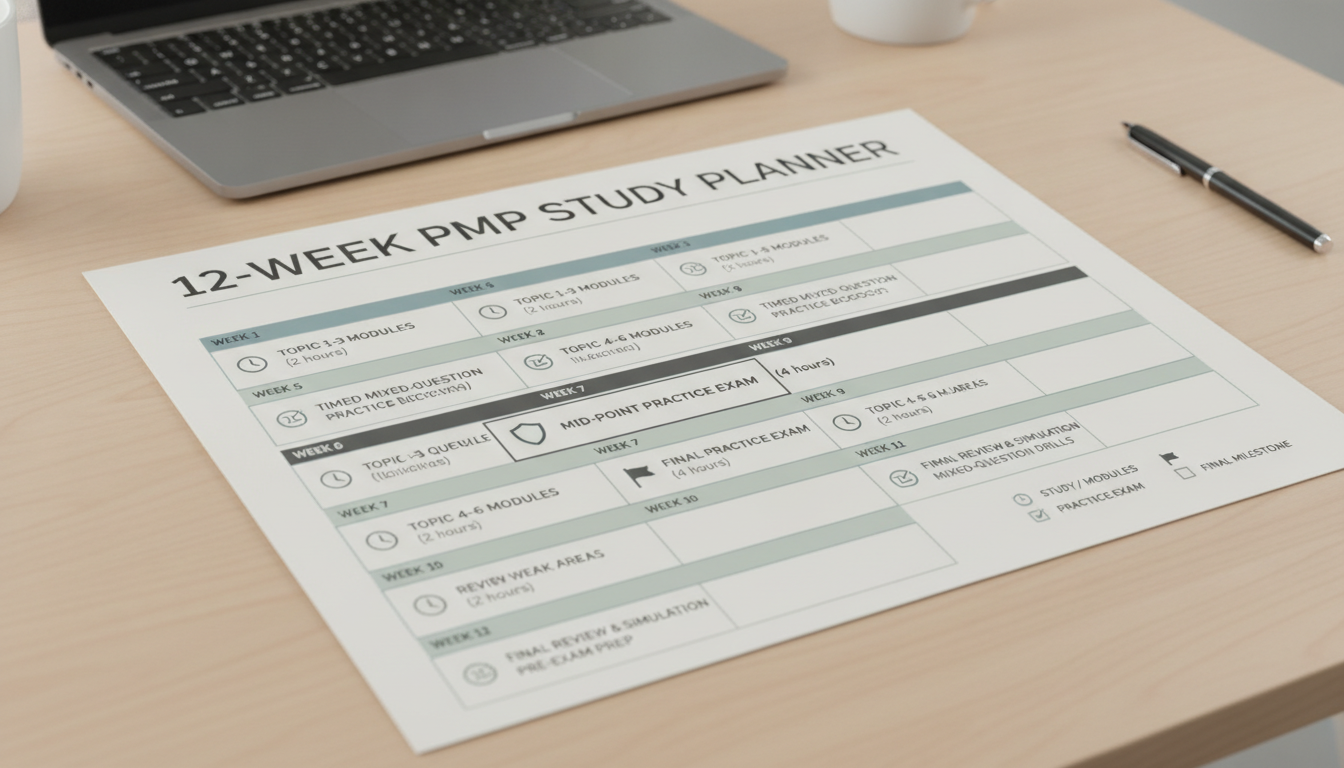
A 10–12 week timetable can provide a starting structure, but it is an example rather than a promise of readiness. Your prior knowledge, project experience and available study time determine how much preparation you need.
Begin with the current exam outline and a diagnostic practice session. Use the result to choose topics for review, not as an official passing threshold. Mock exams vary in difficulty and scoring, so do not treat a percentage such as 70–80% as a universal rule for booking the exam.
Build a repeatable cycle with clear learning goals:
- Choose study blocks you can realistically protect each week.
- Review a topic and explain its key ideas in your own words.
- Apply those ideas to unfamiliar scenarios.
- Review errors and uncertain answers, then choose the next topic from the evidence.
Track what you misunderstood and why another answer fits the scenario. Avoid turning explanations into universal rules that ignore context.
Set weekly targets for understanding and application, not just a number of completed questions. Choose a topic, a practice session and a review outcome you can explain.
As the exam approaches, check:
- Whether you have addressed the current outline’s topics and delivery approaches.
- Whether you can explain decisions in fresh scenarios.
- How you manage pacing and concentration in timed practice.
- The exam appointment, identification rules, testing setup and break instructions.
Keep the final days manageable. Use them for focused review and logistics rather than assuming a fixed number of last-minute mocks will establish readiness.